
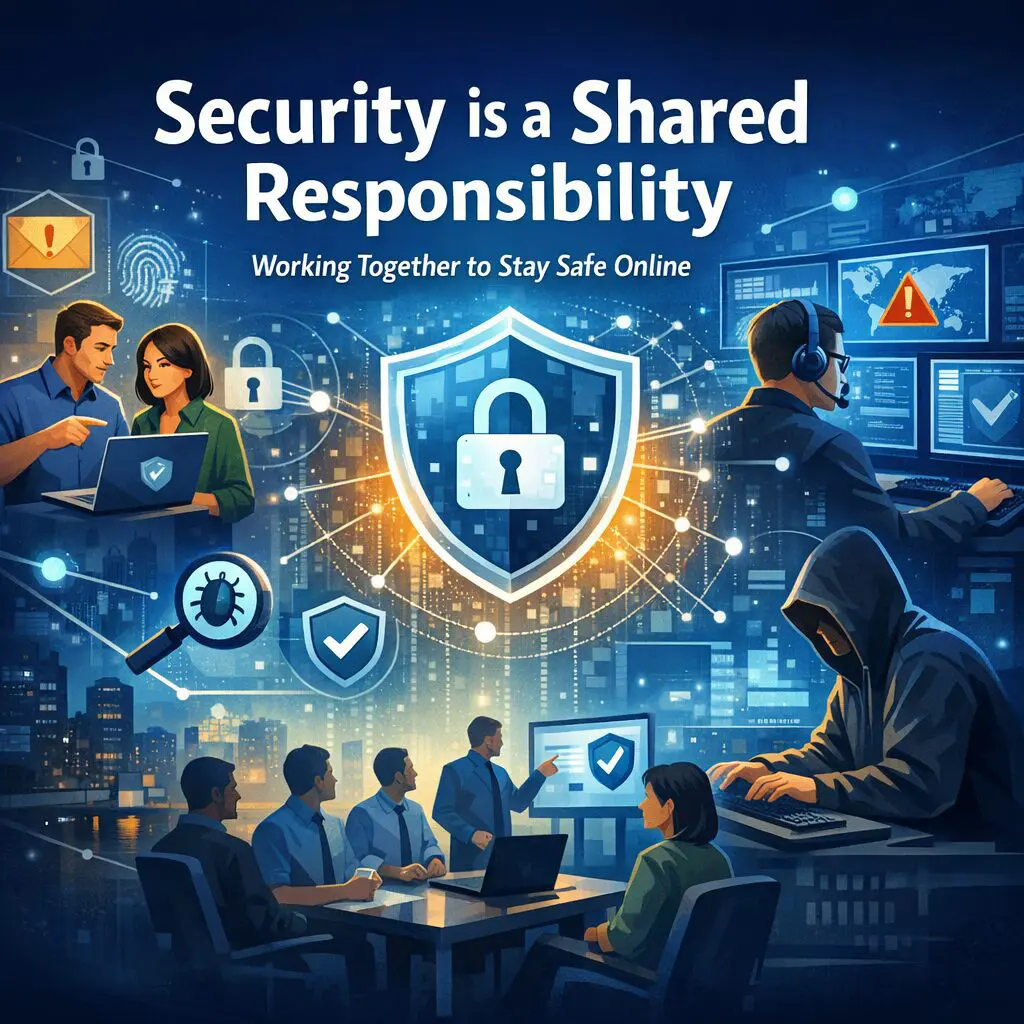
Security is a Shared Responsibility
When businesses think about cybersecurity, they often picture firewalls, antivirus software, and advanced monitoring tools quietly working in the background. While those systems are essential, they are only part of the equation. True security is not something that can be fully outsourced, it is a shared responsibility between the IT provider and your team.
Your IT provider is responsible for building and maintaining a strong defensive foundation. This includes implementing firewalls, deploying endpoint protection, applying security patches, and monitoring systems for suspicious activity. These layers are critical, but they are not foolproof on their own.
The human element remains one of the most significant factors in cybersecurity.
The Role of End Users
Every employee who interacts with your systems plays a direct role in keeping your organization secure. Simple actions, like choosing a weak password, clicking on a phishing email, or bypassing established security policies, can unintentionally open the door to threats.
Even the most advanced security systems can be undermined by a single mistake.
For example:
- A compromised password can give attackers direct access to sensitive systems
- A phishing email can trick users into revealing credentials or downloading malware
- Ignoring security policies can create gaps that attackers are quick to exploit
These risks are not theoretical; they are some of the most common causes of real-world security breaches.
Technology Alone is Not Enough
Many organizations invest heavily in security tools but overlook the importance of user awareness. Firewalls and antivirus software are designed to block known threats, but they cannot always prevent human error. That is why training is just as important as technology.
Regular security awareness training helps employees:
- Recognize phishing attempts and suspicious behavior
- Understand the importance of strong, unique passwords
- Follow best practices when handling sensitive information
When users are educated and vigilant, they become an active line of defense rather than a vulnerability.
Building a Strong Security Culture
The most secure organizations treat cybersecurity as a shared effort across the entire company. This means creating a culture where employees understand their role and take it seriously. Practical steps include enforcing strong password policies and multi-factor authentication, conducting ongoing security training and simulated phishing exercises, encouraging employees to report suspicious activity without hesitation, and clearly communicating security policies and expectations.
When security becomes part of everyday behavior, not just an IT function, your organization is significantly better protected.
The Bottom Line
Your IT provider can build powerful defenses, but they cannot control every action taken by end users. Security is strongest when both technology and people work together.
End users should understand that they are not separate from the security layer, they are a critical part of it.